Nigeria Sinotruk Local Sales Center 2025 Howo New Model
Top One World Famous Brand - Sinotruk Nigeria
Nigeria Sinotruk Local Sales Center 2025 Howo New Model
1. What Is a Hydraulic Modular Trailer?
2. Why Is a Hydraulic Modular Trailer Important for Heavy Transport in Nigeria?
3. Hydraulic Modular Trailer vs. SPMT: What Are the Main Differences?
4. Which Hydraulic Modular Trailer or SPMT Fits Different Projects in Nigeria?
5. How Should Buyers Choose a Hydraulic Modular Trailer for Sale in Nigeria?
6. FAQ About Hydraulic Modular Trailer, Nicolas, Goldhofer and SPMT in Nigeria
For heavy and oversized cargo transportation in Nigeria, a hydraulic modular trailer is used when a conventional semi-trailer cannot provide enough axle capacity, load distribution or configuration flexibility. Project cargo such as transformers, pressure vessels, generators, refinery equipment, mining machinery and large construction components may require a transport system that can be assembled around the cargo instead of relying on one fixed trailer body.
For Nigerian buyers, the important issue is how the equipment will be used. A hydraulic modular trailer is normally connected to a tractor for movement, while an SPMT carries its own propulsion system. This difference affects the route, site requirements, operating method and overall transport plan.
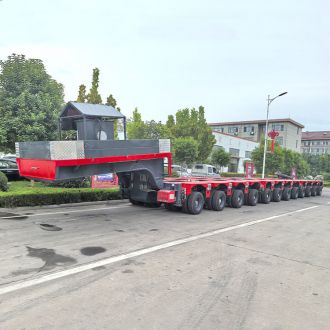
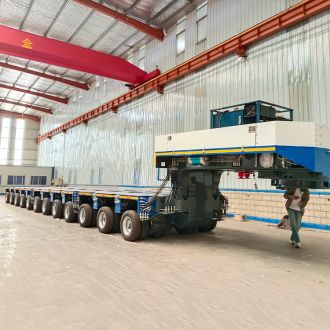
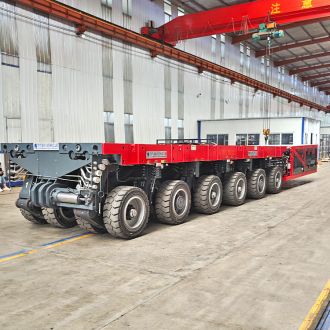
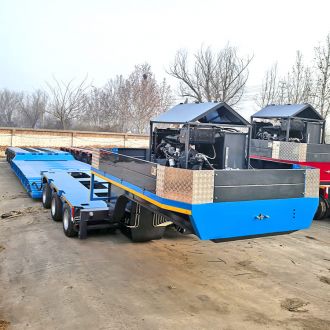
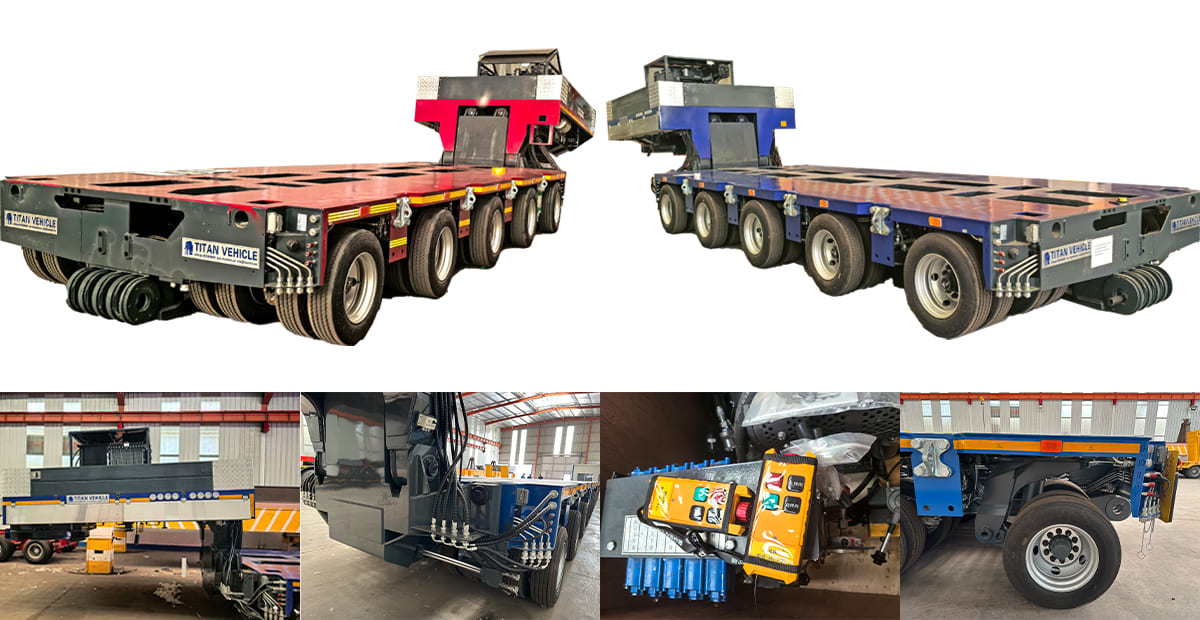
A hydraulic modular trailer is a heavy-duty transport platform built from individual axle-line modules. The modules can be connected in different arrangements to create a configuration that matches the cargo. Instead of forcing a large or heavy load onto a fixed trailer, the transporter can be expanded or rearranged to support the cargo more appropriately.
Hydraulic suspension is one of the defining features. Each axle line can work through the hydraulic suspension system so that the transport platform can respond to uneven surfaces and maintain the required support under heavy loads. The system also works with the steering arrangement to improve maneuverability.
A standard modular trailer normally depends on a tractor for propulsion. The tractor pulls the loaded platform, while the modular trailer handles load support, hydraulic suspension and steering.
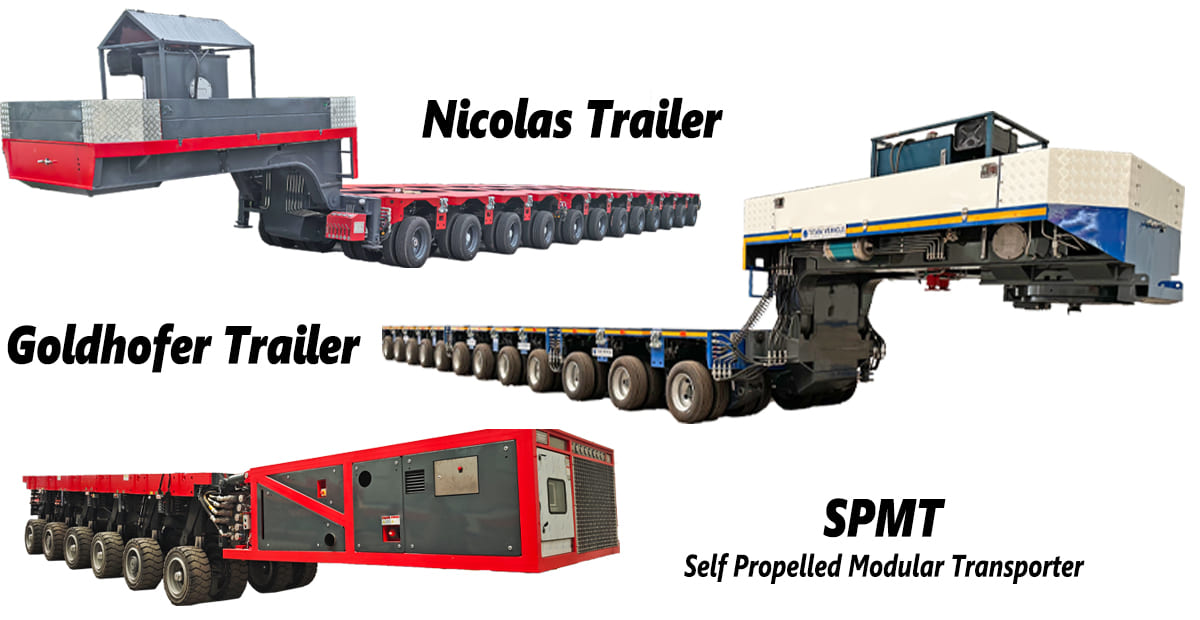
An SPMT uses the same general modular philosophy but adds an integrated power source. The transporter itself provides the driving force, allowing heavy cargo to move without relying on a conventional tractor for propulsion. This creates a clear difference between hydraulic modular trailer and SPMT equipment. The modular trailer is primarily a configurable trailer system, while SPMT is a self-propelled transport system.
1.1 What Does Nicolas Mean in Heavy Transport?
Nicolas is commonly encountered in the heavy-haul modular equipment market, especially in discussions involving hydraulic modular systems and large project cargo. In an equipment comparison, Nicolas can be treated as a modular heavy-transport solution that uses modular axle lines, hydraulic suspension and specialized configurations.
For Nigerian buyers searching for nicolas spmt, it is important to distinguish the equipment concept from the search phrase. Nicolas-related modular equipment is not automatically the same as an SPMT merely because both can use multiple axle lines.
A Nicolas-type hydraulic modular trailer is normally evaluated through its module arrangement, axle-line capacity, steering, hydraulic suspension and towing method. An SPMT is evaluated additionally through its power pack, drive system and independent control.
This distinction becomes useful when a Nigerian contractor is comparing equipment for road transportation with equipment intended mainly for plant-site movement. It is also why the phrase nicolas spmt may appear during early-stage equipment searches, even when the buyer ultimately needs a towed modular system.
1.2 What Does Goldhofer Mean in This Comparison?
Goldhofer is another name frequently associated with modular heavy-haul transport equipment. For this article, Goldhofer is considered within the broader modular transport solution rather than as a separate transport principle.
This means the key comparison remains hydraulic modular trailer versus SPMT. A Goldhofer configuration represents one possible modular transport approach, while SPMT represents the self-propelled approach.
Buyers in Nigeria who search for goldhofer spmt may therefore be comparing a modular transport solution with a self-propelled modular transport system. The exact equipment configuration still needs to be checked because two modular systems can have different axle arrangements, steering systems, hydraulic capabilities and operating requirements.
1.3 Why Hydraulic Systems Matter
A hydraulic modular trailer uses hydraulic systems to manage suspension and, depending on the design, steering and other transport functions. This is important because very heavy cargo does not create a simple static load. During braking, acceleration, turning and movement over uneven surfaces, the transport system has to manage changing forces.
The hydraulic system helps the axle modules react to changes in surface conditions and cargo loading. This makes modular equipment particularly useful for project cargo where load distribution and road conditions vary.
An SPMT takes this principle further by integrating propulsion and electronic or hydraulic control with the modular platform. As a result, the transporter can move at controlled low speeds while maintaining coordinated steering and suspension behavior.
For buyers in Nigeria, the difference is practical. A hydraulic modular trailer is strongly associated with tractor-based heavy haulage, while an SPMT is more closely associated with self-propelled transport and final positioning.
 Hydraulic Modular Trailer for Sale in Nigeria: Nicolas, Goldhofer, SPMT
Nigeria has a wide range of industrial, construction, energy, mining and infrastructure activities that can generate oversized cargo requirements. Large equipment may need to move between ports, logistics yards, factories, project sites and industrial facilities.
For Nigerian transport companies, this creates demand for equipment that is more adaptable than an ordinary lowbed or flatbed trailer.
A hydraulic modular trailer can be configured around cargo weight and dimensions. The trailer can use multiple axle lines to spread the load, while the modular structure provides more flexibility than a fixed trailer.
At the same time, some Nigeria projects require more than road transportation. Large equipment may need to be moved inside an industrial plant after it arrives at the site. This is where SPMT can become more relevant because it can provide its own propulsion and controlled movement.
2.1 Port-to-Project Transportation
Major Nigerian ports and logistics centers can act as entry points for imported industrial equipment. Once heavy cargo has been unloaded, it may need to travel to a factory, refinery, power project, mining operation or construction site.
A hydraulic modular trailer can be useful for this kind of movement because the equipment can be configured according to the cargo and connected to a suitable heavy-duty tractor.
The road section should be considered as a complete transport combination. The trailer cannot be evaluated separately from the tractor, cargo height, overall width, turning requirements and route conditions.
For Nigeria projects involving oversized cargo, route planning is especially important because the transport operator may need to consider bridges, road geometry, urban sections, construction zones and site access. A buyer researching nicolas spmt should still check whether the intended operation is road haulage or self-propelled site transport.
An SPMT can become useful after the cargo arrives at the project. If the final delivery requires movement through a restricted area or accurate positioning, the self-propelled system can provide a different operating capability.
This is why the search terms goldhofer spmt and nicolas spmt often appear together in heavy-haul research. Buyers are not always comparing identical products; they may be comparing different ways of solving different stages of the same transport problem.
2.2 Energy and Power Equipment
Nigeria's energy sector can require transportation of large transformers, generators, turbines, vessels and other equipment. Such loads may be heavy, concentrated or unusually shaped.
A hydraulic modular trailer provides a flexible support platform for these loads. The number and arrangement of axle lines can be selected according to the cargo, while hydraulic suspension helps maintain the required support during transport.
For a transformer moving along a road route, a tractor-towed modular system can be a practical approach when the complete combination fits the route and operating conditions.
For movement inside a power facility, however, an SPMT may be more suitable when the cargo has to be positioned precisely.
A Nigerian contractor handling both transportation and installation may therefore need to understand both systems rather than treating hydraulic modular trailer and SPMT as interchangeable.
2.3 Oil, Gas and Petrochemical Projects
Large oil, gas and petrochemical projects can involve reactors, columns, tanks, heat exchangers, process modules and other heavy equipment.
The difficulty is often not only the weight. The cargo may be exceptionally long, wide or high, creating challenges during turning and site access.
A hydraulic modular trailer can be built around these dimensions by adding or arranging modules according to the required support pattern.
A Goldhofer configuration is relevant to this type of modular heavy transport because the equipment concept is designed around modularity rather than a fixed trailer body.
For Nigerian buyers evaluating goldhofer spmt options, the more useful question is whether the cargo needs a tractor-towed modular system or self-propelled site transportation.
If the main requirement is to move cargo along a road from a port to a project location, hydraulic modular trailer equipment can fit the operation. If the main difficulty is maneuvering the cargo through an industrial facility, SPMT may provide the needed independence.
2.4 Construction and Mining Equipment
Construction and mining projects can involve excavators, crushers, processing equipment, structural components and other machinery that may exceed conventional trailer dimensions or payload limits.
A hydraulic modular trailer can be configured for large machinery when the cargo needs road transportation and suitable towing equipment is available. A modular system can also be adapted for unusually wide cargo by arranging axle modules side by side. This is one of the major advantages of modular equipment over a fixed trailer.
SPMT becomes more relevant when the cargo must move within a construction or mining site, especially when the route is short but the maneuvering requirement is complicated.
In Nigeria, this distinction can help contractors avoid selecting equipment solely according to maximum capacity. A transport system that is technically capable of carrying the load may still be inefficient if its propulsion and steering method do not suit the work environment.
 Hydraulic Modular Trailer for Sale in Nigeria: Nicolas, Goldhofer, SPMT
The most important difference between a hydraulic modular trailer and SPMT is propulsion. Both can use modular axle lines and hydraulic suspension, but they are built around different operating methods.
A hydraulic modular trailer is normally part of a tractor-towed combination. The tractor provides the driving force, while the modular trailer supports the cargo and manages hydraulic suspension and steering.
SPMT integrates propulsion into the transport platform itself. The power pack and hydraulic drive allow the transporter to move independently, while the control system coordinates steering and suspension.
For Nigerian buyers, this difference affects where the equipment is most useful.
| Feature | Goldhofer Trailer | SPMT |
|---|---|---|
| Transport type | Hydraulic modular trailer | Self-propelled modular transporter |
| Propulsion | Tractor required | Built-in power pack |
| Hydraulic system | Suspension + steering | Suspension + drive + steering |
| Steering | Hydraulic | Multi-directional |
| Typical cargo | Vessels, tanks, transformers, machinery | Modules, vessels, transformers, plant equipment |
| Typical application | Port-to-site / heavy road haulage | Plant / refinery / construction-site movement |
| Nigeria use | Long-distance heavy transport | Heavy site transport & positioning |
3.1 Hydraulic Modular Trailer for Road Transport
The strongest application of a hydraulic modular trailer is heavy transportation where towing by a suitable tractor is practical.
Because the modules can be combined, the equipment can be configured for different cargo dimensions and loading requirements. This is useful when a transport company handles many types of project cargo instead of one standardized product.
The tractor remains a critical part of the system. Buyers must consider tractor power, coupling compatibility and the complete vehicle combination rather than looking only at the trailer.
For Nigeria, this is especially relevant for port-to-project transportation. A modular trailer may travel significant road distances as part of a heavy-haul convoy, with the tractor providing the necessary propulsion.
A Goldhofer-type modular system can be considered within this category. When a buyer searches for goldhofer spmt, the actual product should therefore be identified before comparing specifications or prices.
3.2 SPMT for Controlled Site Movement
SPMT is particularly useful when the transport challenge is concentrated at the destination rather than on the road.
Large industrial sites often have limited turning areas and fixed structures. A large vessel or process module may need to move slowly through the site and align with a specific installation point.
Because the SPMT has its own power system, the operator can control movement directly through the transporter.
This gives SPMT a different operational role from a tractor-towed hydraulic modular trailer.
For Nigeria projects, SPMT can be relevant to refinery construction, power plants, industrial facilities, shipyard-related operations, large infrastructure projects and other sites where precise movement is part of the job.
3.3 Nicolas and Goldhofer Within the Modular Transport Category
Nicolas and Goldhofer are often mentioned in searches for heavy modular transport equipment because buyers may be looking for established modular systems rather than conventional trailers.
A Nicolas-type modular configuration can be evaluated according to axle-line arrangement, hydraulic suspension, steering and towing requirements. A Goldhofer-type modular configuration can be evaluated using the same basic categories, but the actual module design and accessories still need to be confirmed. This is why nicolas spmt and goldhofer spmt should be treated as search terms that may lead buyers to related but different transport solutions.
The important comparison remains the operating concept: modular trailer for tractor-based heavy haulage versus SPMT for self-propelled modular transportation.
The right equipment for a Nigeria project depends on where the transport difficulty occurs.
If the main challenge is carrying an extremely heavy load over a road route, a hydraulic modular trailer can provide a configurable support platform while the tractor supplies propulsion.
If the main challenge is maneuvering the cargo inside the destination site, SPMT can provide independent movement and more controlled positioning.
4.1 Heavy Industrial Equipment
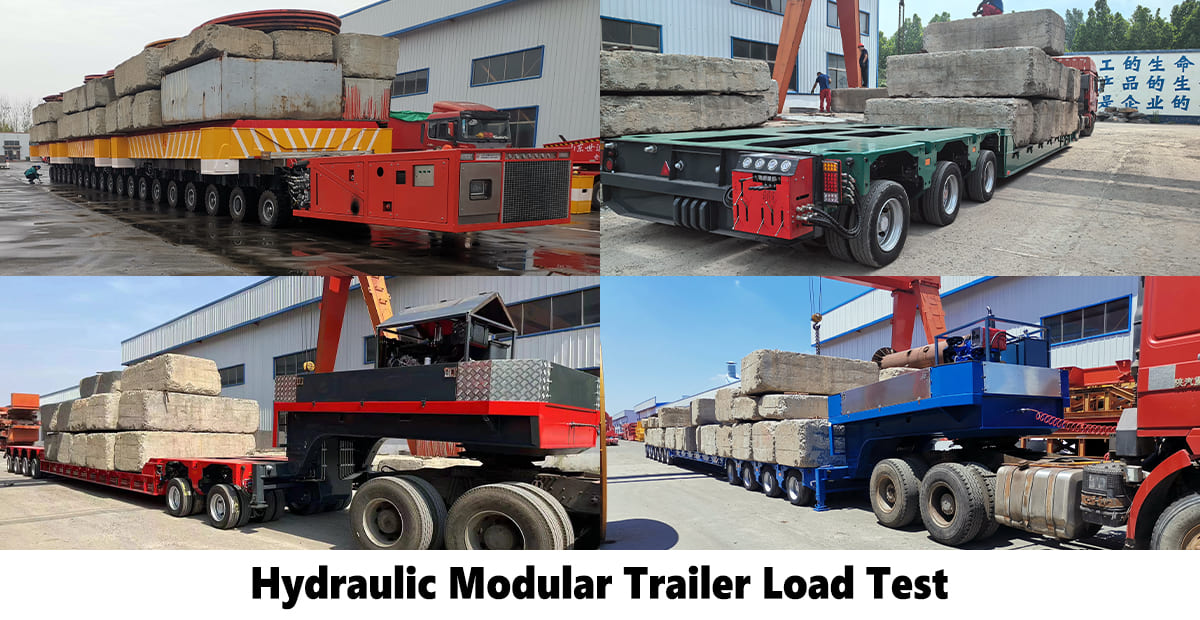
Heavy industrial equipment often requires a combination of high load capacity and careful weight distribution. A hydraulic modular trailer allows the transporter to use multiple axle lines and create a support arrangement suited to the cargo. The exact number of modules should be determined from the cargo and project requirements rather than selected solely because a larger configuration appears more capable. For Nigeria industrial transportation, this approach can be useful when moving transformers, generators, vessels and other equipment between transport hubs and project sites.
4.2 Oversized Process Modules
Process modules can be difficult because their dimensions may be large even when the cargo weight is not concentrated in one small area. A modular trailer can be arranged to provide support at the necessary points, while the hydraulic suspension helps the platform respond to changes in the road surface. If the same module needs to be moved through a plant after delivery, SPMT may be used for the site phase. This creates a practical transport chain in which the two systems solve different parts of the job.
4.3 Long and Wide Cargo
Long cargo may require additional axle lines in the longitudinal direction, while very wide cargo may require a side-by-side module arrangement. This modularity is one of the strongest reasons to use a hydraulic modular trailer instead of a fixed trailer. The same general modular principle exists in SPMT, but the self-propelled system provides more independence in maneuvering. For Nigeria buyers, the choice therefore depends partly on whether the cargo spends most of its time on public or project roads or mainly inside a controlled site.
4.4 Port Operations
Ports can present a mixture of open working areas and restricted routes. A hydraulic modular trailer can be used when heavy cargo needs to leave the port as part of a tractor-towed combination. The configuration can be prepared according to the cargo before the movement begins. SPMT can be useful within the port when cargo needs to be moved short distances with precise control. The two systems can therefore appear in the same Nigeria logistics project without performing the same role.
4.5 Refinery and Power-Plant Projects
Refinery and power-plant construction can involve some of the most demanding heavy-transport operations. The road section may require a hydraulic modular trailer, while final site positioning may require SPMT. For a contractor planning a fleet in Nigeria, understanding this distinction helps determine whether a modular trailer, SPMT or a combination of equipment is appropriate. The same logic applies when comparing Nicolas and Goldhofer configurations. The buyer should identify which transport stage the equipment is expected to perform.
Buying a hydraulic modular trailer in Nigeria should begin with the cargo and transport route.
The buyer should prepare the cargo weight, dimensions, center of gravity and support points before asking suppliers to recommend a module combination. For unusually shaped cargo, drawings and loading information are particularly useful because they allow the supplier to design the transport configuration around the real load.
The route should then be evaluated. Road width, turning areas, bridges, overhead restrictions, site entrances and internal project roads can all influence equipment selection. For an SPMT project, the site itself becomes even more important because the transporter may be expected to move through restricted areas and perform final positioning.
5.1 Check the Module Configuration
The module arrangement determines how the cargo weight is distributed across the transporter.
A hydraulic modular trailer may use different numbers of axle lines depending on the cargo. The buyer should confirm axle-line capacity, module dimensions, hydraulic suspension and steering configuration rather than comparing only the overall tonnage.
This is particularly important when comparing a Goldhofer-type system with another modular trailer. A similar payload figure does not mean that the two systems have identical configurations.
For Nigerian procurement, the supplier quotation should clearly state what modules and supporting components are included.
5.2 Check the Towing Requirement
A hydraulic modular trailer normally requires a suitable tractor.
The buyer should therefore evaluate the trailer and tractor as one heavy-haul combination. Tractor power, fifth-wheel connection, braking, steering coordination and overall dimensions can influence whether the planned operation is practical.
This requirement separates a conventional modular trailer from SPMT.
An SPMT carries its own propulsion and does not depend on a tractor for the same basic movement. Its requirements instead include the power pack, hydraulic drive and control system.
For Nigeria contractors, the choice can partly depend on whether the company already operates suitable heavy-haul tractors.
5.3 Check the Steering and Maneuvering Requirements
A heavy load can be easy to carry but difficult to turn.
The buyer should therefore consider the route geometry and required turning movements before choosing the equipment.
A hydraulic modular trailer can provide hydraulic steering, but the tractor and trailer still form a combined transport system.
SPMT provides a higher level of independent maneuvering because propulsion and steering are integrated into the transporter.
This difference is important when the cargo must enter a restricted plant area or reach an exact foundation location.
5.4 Compare Nicolas, Goldhofer and SPMT by Function
Buyers searching for nicolas spmt or goldhofer spmt may initially be looking for three names that appear similar in heavy-haul searches. A more useful comparison is to classify the equipment by function.
Nicolas and Goldhofer can be considered in the modular heavy-transport category, where the equipment is designed around modular axle lines, hydraulic suspension and configurable load support.
SPMT represents the self-propelled modular category, where propulsion is built into the transporter.
This classification prevents the purchasing process from becoming a simple comparison of brand names. The same principle applies to searches for nicolas spmt: the buyer should identify the actual transport configuration before making a technical or price comparison.
5.5 Consider After-Sales Support in Nigeria
Heavy modular equipment is a long-term investment. The buyer should consider not only the purchase specification but also how the equipment will be operated and maintained after delivery.
Important factors include spare-parts availability, hydraulic-system support, operator training, technical documentation and supplier response.
For Nigeria, access to practical maintenance support can matter greatly because the equipment may be used for demanding projects far from the original supplier.
A technically capable hydraulic modular trailer still needs appropriate maintenance and operation to deliver consistent performance.
 Hydraulic Modular Trailer for Sale in Nigeria: Nicolas, Goldhofer, SPMT
What is a hydraulic modular trailer?
A hydraulic modular trailer is a heavy-duty transport system made from multiple axle-line modules with hydraulic suspension and steering functions. The modules can be combined into different configurations to support heavy and oversized cargo.
What is the difference between hydraulic modular trailer and SPMT?
The main difference is propulsion. A hydraulic modular trailer normally relies on a tractor for movement, while SPMT includes its own propulsion system and can move independently.
What is Nicolas SPMT?
The search term nicolas spmt can refer to heavy modular transport equipment associated with Nicolas and SPMT technology. Buyers should check the actual equipment configuration because a conventional modular trailer and an SPMT are not the same operating system.
What does Goldhofer SPMT mean?
The search term goldhofer spmt is often used when buyers are looking for heavy modular transport equipment and self-propelled modular systems. The exact product should be identified before comparing technical specifications because modular trailer and SPMT systems have different propulsion arrangements.
Is a hydraulic modular trailer suitable for Nigeria?
A hydraulic modular trailer can be suitable for Nigeria projects involving heavy industrial equipment, machinery, power equipment, tanks, vessels and other oversized cargo. The correct configuration depends on the cargo, route, axle loading and towing equipment.
Can a hydraulic modular trailer and SPMT be used on the same project?
Yes. In Nigeria, a hydraulic modular trailer may be used for a road transportation stage, while SPMT can take over for final site movement or positioning. Using different equipment for different transport stages can be practical when the road and site requirements are different.
What cargo can a Goldhofer trailer carry?
A Goldhofer-type modular trailer can be used for heavy industrial and project cargo when the module configuration matches the load. The actual capability depends on the selected equipment, axle arrangement and operating conditions.
What should I check before buying a hydraulic modular trailer in Nigeria?
Check the cargo dimensions and weight, axle-line configuration, hydraulic suspension, steering system, towing requirements, module arrangement, technical documentation, spare-parts support and intended route. For Nigeria projects, site access and final positioning should also be considered.
Which system is suitable for Nigerian industrial projects?
A hydraulic modular trailer can suit tractor-based heavy road transportation, while SPMT can suit controlled site transportation and positioning. Nicolas and Goldhofer configurations can be considered within the modular heavy-transport side of the comparison, depending on the actual specification.
What is the main advantage of modular transport equipment in Nigeria?
The main advantage is configurability. Instead of using one fixed trailer for every cargo type, modular equipment can be arranged around different cargo weights and dimensions, giving Nigerian heavy-haul operators more flexibility for project transportation.
Add: PLOT 3, OBA, AKRAN AVENUE, IKEJA, LAGOS